





RECURRING QUESTIONS ABOUT ESBE PRODUCTS - PART 1
2026-06-02

Frequently asked questions and answers about ESBE products:
"You are fantastic!" – that's what we usually hear when our customers have spoken to our support team. Here, we have boiled down their expertise into three answers to the most frequently asked questions right now.
1. WHERE IS THE SLEEVE LOCATED IN THE VRG AND VRB VALVE SHOWN?
The groove/milled part on the sleeve shaft indicates the sleeve's position inside the valve (the top of the valve shaft points towards the center of the sleeve/slide part).
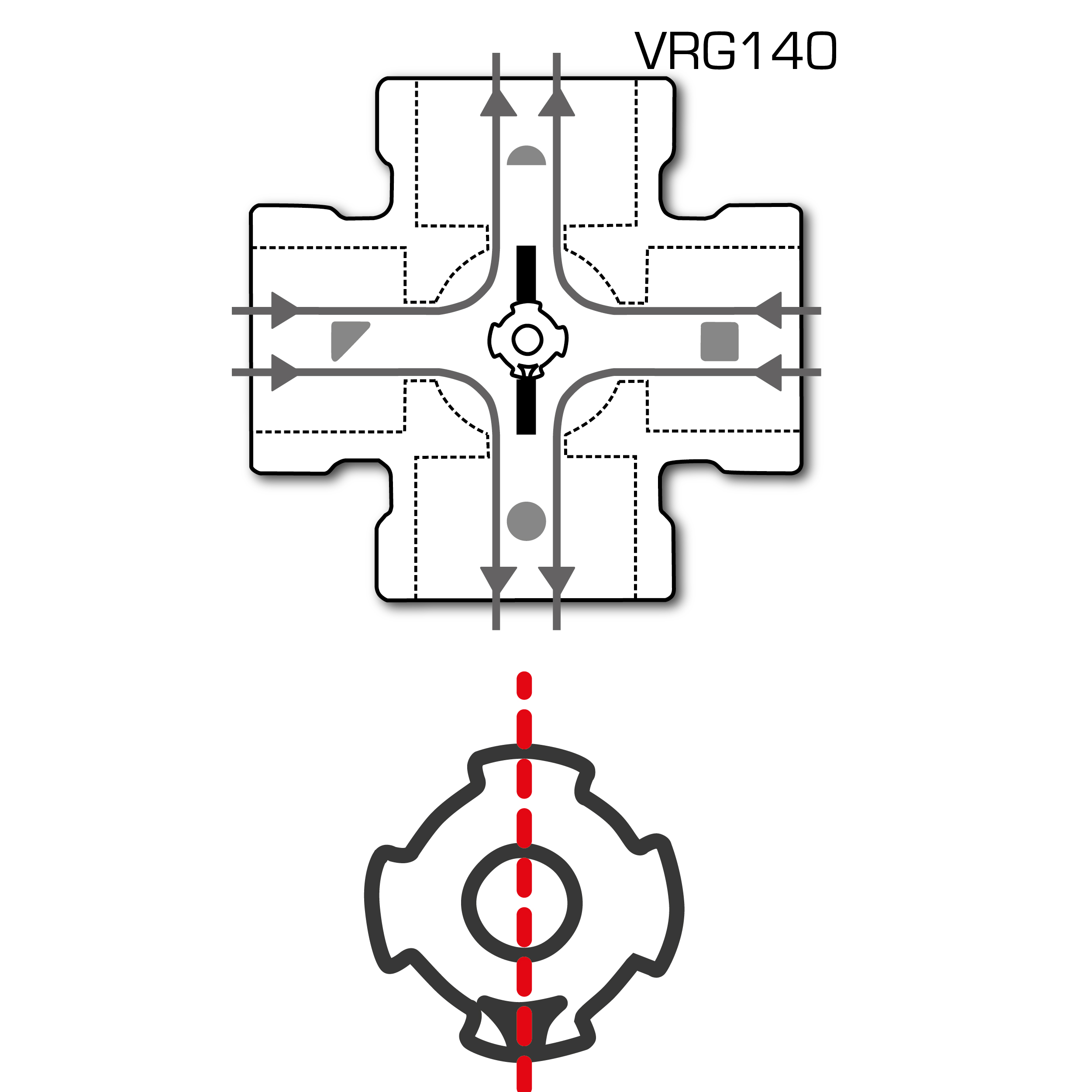
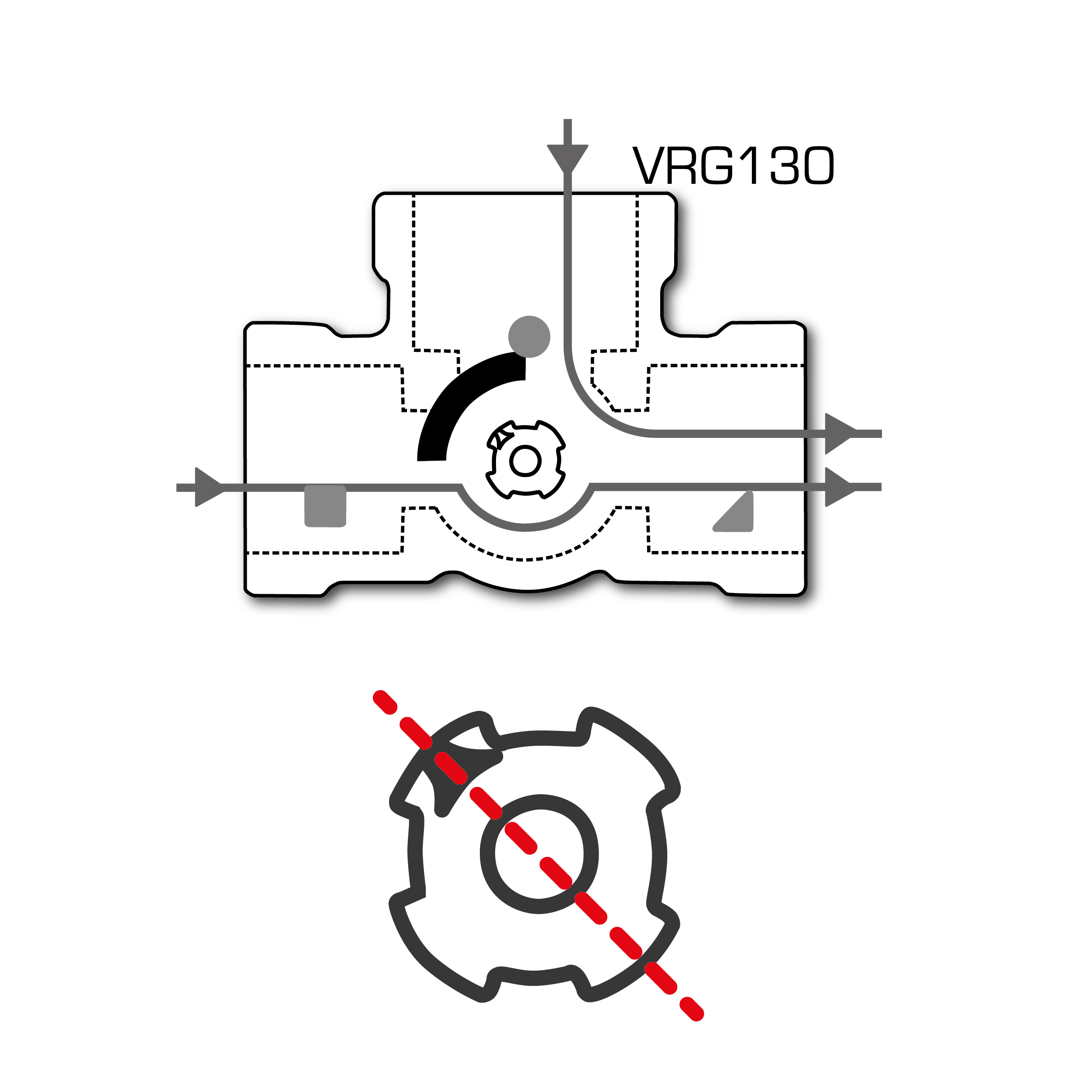
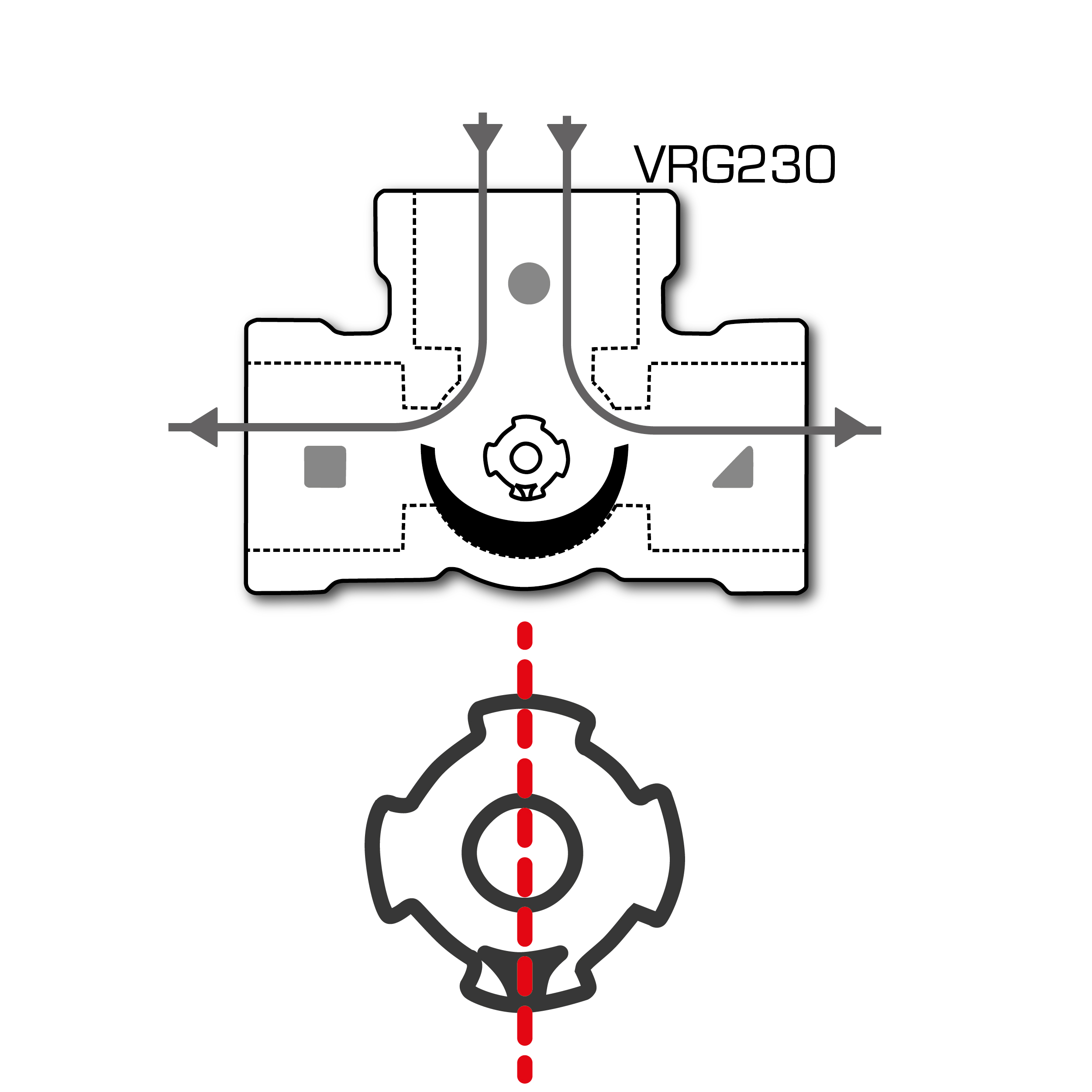
In practice, this means:
● Indication: The port that the shaft's flat section or the knob's indicator points toward is the closed port.
● Function: By looking at the end of the shaft (the flat part), you can always know how the sleeve is positioned inside the valve housing without having to open it.
This applies to both the VRG series (3-way) and the VRB series (bivalent).
If you are carrying out an installation, it might also be helpful to know that the scale on the valve is reversible and can be rotated to suit different mounting positions, as long as you use the shaft marking to find the correct baseline position. The scale on a manually operated mixing valve limits the valve's rotation range.
2. WHICH TYPE OF ACTUATOR/CONTROLLER FITS MY ESBE VALVE?
For the most common rotary control valves (VRG and VRB), these series are mainly applicable:
● ARA600 Series: This is the most common actuator for rotary control valves, available with various control signals.
● 90 Series: For valves requiring higher torque or specific run times (frequently used on larger valves).
● Controllers (e.g., CRB200, CRA200): If you prefer an "all-in-one" solution where the actuator features a built-in indoor or outdoor sensor.
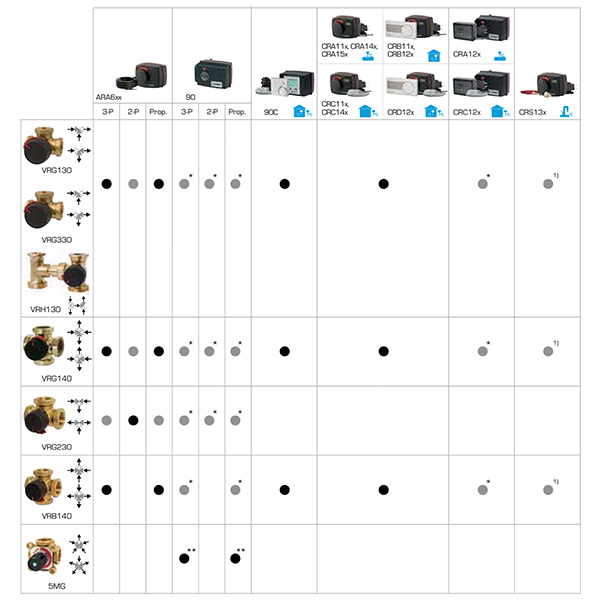
In the selection guide, you can view more combinations of ESBE actuators and controllers for different ESBE valves.
3. HOW SHOULD THE ACTUATOR BE MOUNTED ON THE VALVE?
Mounting is done in a few simple steps to ensure the sleeve and the motor are synchronized.
Set the valve to the mid-position: This means the sleeve inside the valve is positioned exactly halfway between the two end positions = 50% open. Since the flow direction (right- or left-hand assembly) determines which position is "mid", there are specific illustrations in the valve operating instructions showing exactly how the shaft should point for your specific installation.
As standard, both valves and actuators are delivered in the mid-position straight from the factory, but if the actuator has moved, do the following:
● Set the actuator to manual mode (usually by clicking out or turning the knob/button).
● Manually turn it to the mid-position.
● Mount the actuator on the valve.
● Don't forget to reset it to automatic mode once the mounting is complete.
Before turning on the power: Check that the mounting kit (adapter) is securely fitted and that the actuator sits tightly against the valve according to the instructions. Even though the steps above are general, it is in the operating instructions where you will find the crucial details for your specific setup. Use the manual as a map to confirm that the "mid-position" for your specific pipework layout looks exactly like the image. This saves a lot of time and prevents the motor from attempting to force the valve past its end stop.
Here is a great video that clearly explains the most important things to keep in mind. The example shows how to install your ESBE Actuator (ARA 3-point Series) on a VRG valve.
Good luck – get in touch if you have questions that cannot be answered here, or if you simply cannot solve your problem. We are here to help!
More frequently asked questions and plenty of useful answers can be found here >>
Related links:
JONAS GUIDES US THROUGH ESBE ROTARY 4-WAY VALVES