


RISING HEAT PUMP SALES PUT FROST PROTECTION IN FOCUS
2026-10-26
After two years of declining sales, the European heat pump market returned to growth in 2025. According to the European Heat Pump Association (EHPA), around 2.9 million heat pumps were sold across 21 European countries, an increase of 13% compared with the previous year. The upward trend has continued in 2026. During the first quarter, sales increased by 17% across the eleven countries included in EHPA’s figures.
As more heat pumps are installed, protection against cold temperatures becomes relevant for a growing number of installations. This is particularly true for monobloc air-to-water heat pumps, where water circulates between the building and the heat pump’s outdoor unit.
Monobloc systems present a particular risk of freezing
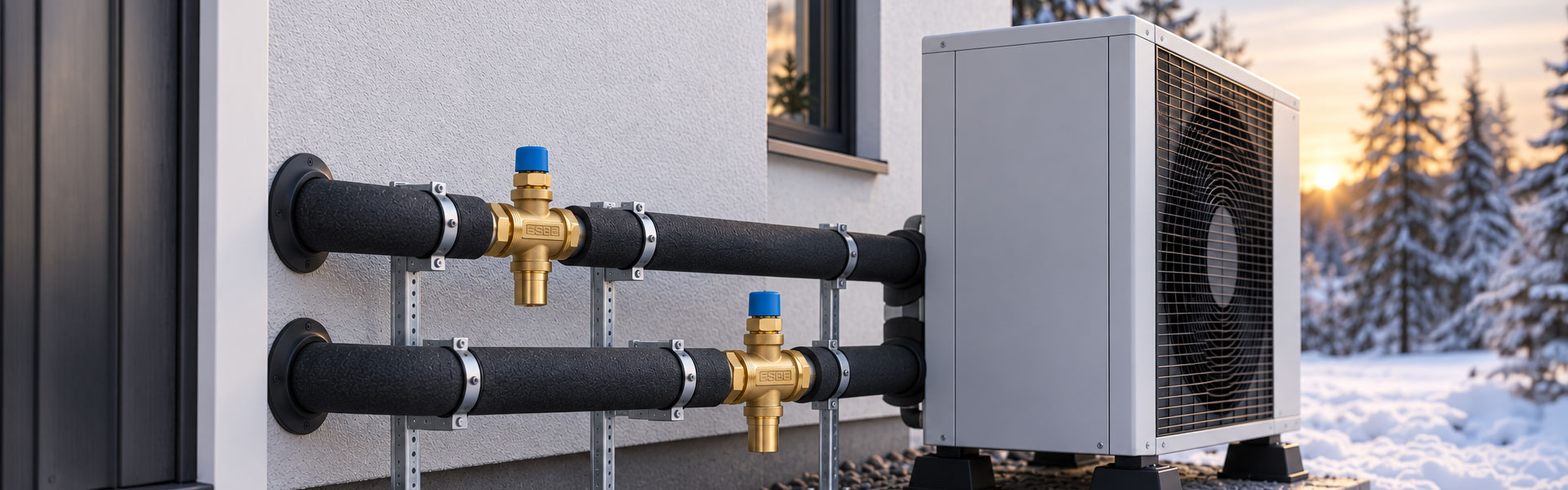
Monobloc heat pumps have become a common choice for air-to-water heat pump installations. Unlike a split system, water circulates between the building and the heat pump’s outdoor unit. This simplifies installation, but it also means that parts of the water circuit are located outdoors.
If there is a power cut on a cold winter’s day, circulation stops. If the water temperature drops sufficiently, the water can freeze and cause damage to components such as pipes and heat exchangers.
Frost protection without electricity
The ESBE VTN series responds to the temperature of the water. When it falls below 3 °C, the valve opens automatically and releases the cold water, allowing warmer water to reach the valve and reduce the risk of freezing.
When the water temperature reaches 4 °C, the valve closes again. The function is entirely mechanical and requires no electricity, control system or manual reset. A simple way to protect costly components when temperatures drop.
How to position the anti-freeze valves
To ensure that the ESBE VTN series provides the intended protection, ESBE recommends installing valves on both the flow and return pipes. The valves must be installed at the lowest point of the part of the system located outdoors, allowing all water to drain from the pipes and heat pump if the temperature becomes critically low.
The outdoor pipework must also be routed without any low points before or after the valves. Otherwise, water can become trapped, much like in a water trap. This can interfere with the operation of the valves and leave water in the system where it may freeze.
When the heat pump also provides cooling
An increasing number of heat pump systems are used for both heating and cooling. This means that cold water may circulate through the pipes even on a warm summer’s day, when there is no risk of freezing. VTN200 takes both the water temperature and ambient temperature into account, allowing it to distinguish between normal cooling operation and an actual risk of freezing.
At an ambient temperature of 7 °C or above, the valve is guaranteed to remain closed, even when the water in the system is cold. As the ambient temperature falls, the frost protection function is activated automatically. This makes VTN200 suitable for monobloc systems used all year round for both heating and cooling.
Two solutions for different systems
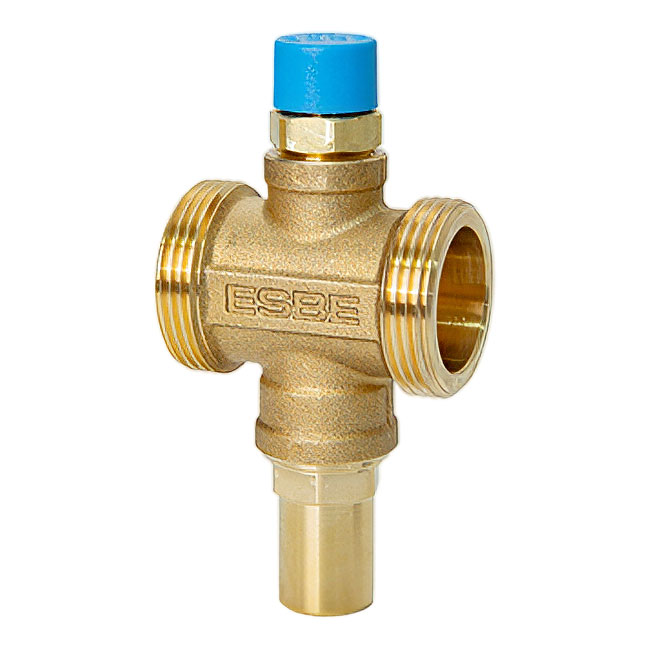
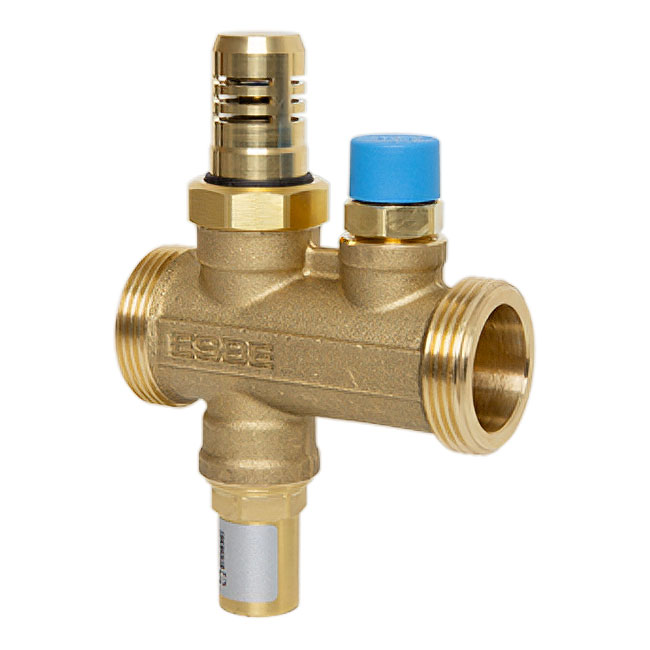
For those looking to reduce the risk of frost damage, ESBE offers two solutions designed for different types of monobloc system. The VTN series operates entirely mechanically, protecting the system without the need for electricity or a manual reset.
VTN100 is designed for heating systems, while VTN200 is designed for systems used for both heating and cooling. Two solutions with the same purpose: to reduce the risk of frost damage and contribute to a safer, more reliable heat pump installation.
Read more about VTN100 »
Read more about VTN200 »
Related articles
ESBE’s anti-freeze valve protects your heat pump »
ESBE VTN200: optimised for both heating and cooling »